
 Čeština
 Deutsch
 Slovenčina
 Polski
 Magyar
Beyond the Film: How Mary Poppins Found Her Wings on the West End Stage
From P. L. Travers' books and Disney's classic to the theatrical magic of the West End.
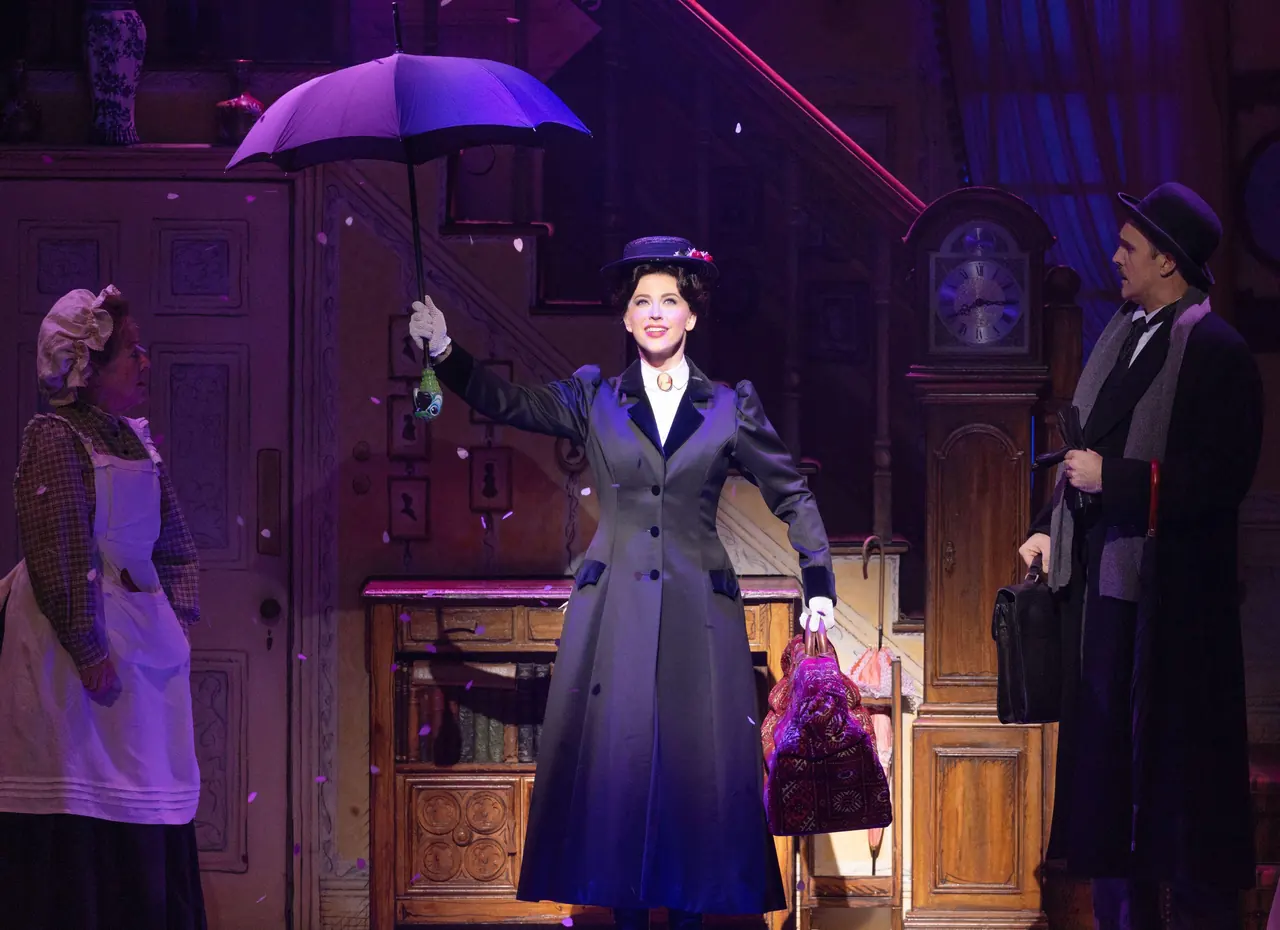
Practically perfect, endlessly enchanting and full of theatrical magic – Mary Poppins reminds us that some stories never grow old.
Few characters are as instantly recognisable as Mary Poppins. With her mysterious arrival, impeccable manners, bottomless carpet bag and unmistakable umbrella, she has captured the imagination of generations.
But long before she became a Disney icon, Mary Poppins was a literary character created by Australian-born author P. L. Travers.
First introduced in Travers' 1934 book, Mary Poppins, the magical nanny arrived at Number 17 Cherry Tree Lane to look after Jane and Michael Banks. The books presented a more mysterious, sometimes stern and unpredictable Mary than the cheerful character many of us grew up watching on screen.
Disney's 1964 film adaptation, starring Julie Andrews and Dick Van Dyke, transformed the story into a worldwide cultural phenomenon. With its memorable songs, colourful animation and unforgettable performances, the film became a classic. Andrews won the Academy Award for Best Actress for her portrayal of Mary Poppins.
For musical theatre lovers, there is another fascinating connection: Andrews had originated the role of Eliza Doolittle in My Fair Lady on Broadway in 1956, linking two of musical theatre's most enduring classics.
Yet Mary's story was far from finished. Its next transformation would take her from the screen to the stage.
From Cherry Tree Lane to the West End
Bringing Mary Poppins to the theatre was an ambitious undertaking. The musical was developed through a collaboration between Disney Theatrical Productions and legendary theatre producer Cameron Mackintosh.
The production premiered at the Bristol Hippodrome in September 2004 before arriving at London's Prince Edward Theatre on 15 December 2004, with Laura Michelle Kelly as Mary Poppins and Gavin Lee as Bert.
The creative team brought together remarkable theatrical talent. The original film songs were written by Richard M. Sherman and Robert B. Sherman, better known as the Sherman Brothers. George Stiles and Anthony Drewe contributed new songs and additional music and lyrics, while Julian Fellowes, the writer behind Downton Abbey, wrote the musical's book.
Richard Eyre directed, with Matthew Bourne providing co-direction and choreography alongside co-choreographer Stephen Mear.
The result was not simply a reproduction of the film. The stage adaptation drew more directly on Travers' original stories, bringing greater depth to the Banks family while preserving the musical moments audiences already loved.
The Music That Makes Us Believe
One of the greatest pleasures of Mary Poppins is, of course, its music.
Few musical theatre scores are so deeply connected to popular culture. Songs such as A Spoonful of Sugar, Chim Chim Cher-ee, Feed the Birds, Jolly Holiday and Supercalifragilisticexpialidocious have become familiar far beyond the world of theatre.
The stage production preserves many of these beloved numbers while introducing new songs, including Practically Perfect, that give the characters fresh opportunities to express themselves.
But the music does more than entertain. It carries the emotional heart of the story, from the Banks family's complicated relationships to the gentle reminder that happiness can sometimes be found in the smallest things.
A familiar melody can bring back childhood memories. On stage, however, it can also take on an entirely new meaning.
The Magic Happens on Stage
What makes Mary Poppins particularly fascinating as a theatrical production is its use of stagecraft.
How do you bring a flying nanny to life in front of a live audience? How do you create the illusion of magic without losing the charm of the original story?
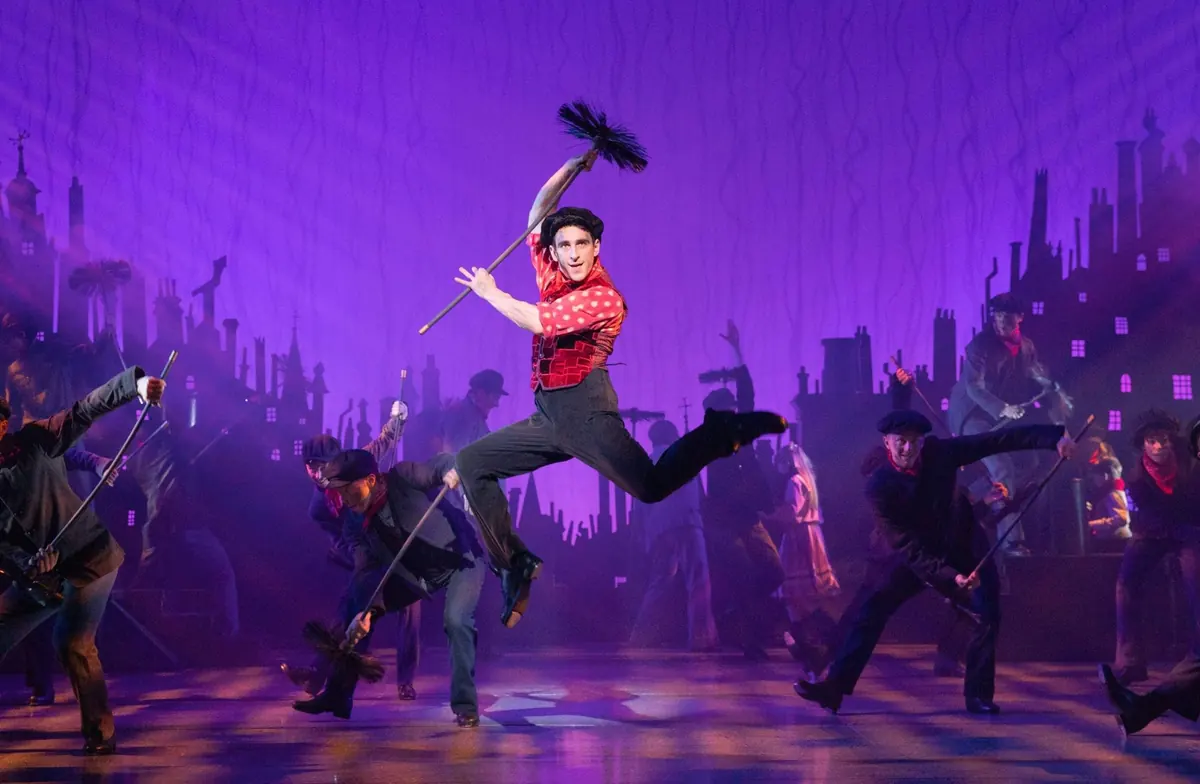
The production answers these questions through elaborate scenery, inventive theatrical effects, spectacular choreography, lighting and carefully designed illusions.
From the extraordinary world inside the Banks household to the energetic rooftop sequences, the stage becomes a place where the seemingly impossible feels entirely believable.
And then, of course, there is Mary's flight.
This is perhaps one of the greatest differences between watching a film and experiencing a musical live. A film can create almost anything through editing and visual effects, but theatre has to make its magic happen in real time.
When Mary Poppins takes flight, the audience experiences that moment together. It is not simply an effect to admire, but a shared moment of wonder.
A Musical for More Than One Generation
At its heart, Mary Poppins is a story about family, imagination and rediscovering what really matters.
While children are captivated by the magic, costumes, dancing and extraordinary adventures, adults may find themselves connecting with an entirely different part of the story.
Mr Banks' journey, the pressures of everyday life and the importance of spending time with the people we love give the musical an emotional dimension that reaches far beyond a children's fantasy.
The stage adaptation also allows the Banks family more room to develop, making their transformation as important as Mary's extraordinary abilities.
That is what makes Mary Poppins such enduring family entertainment. It offers something different depending on the age and perspective of the person watching.
And perhaps that is why returning to the story years later can feel like discovering it all over again.
Practically Perfect, but Never Ordinary
The original West End production ran at the Prince Edward Theatre until 12 January 2008, while a Broadway production had already opened in November 2006.
Mary Poppins eventually returned to the Prince Edward Theatre in 2019, with the West End revival running until January 2023. A subsequent UK and Ireland tour continued bringing its theatrical magic to audiences until January 2026.
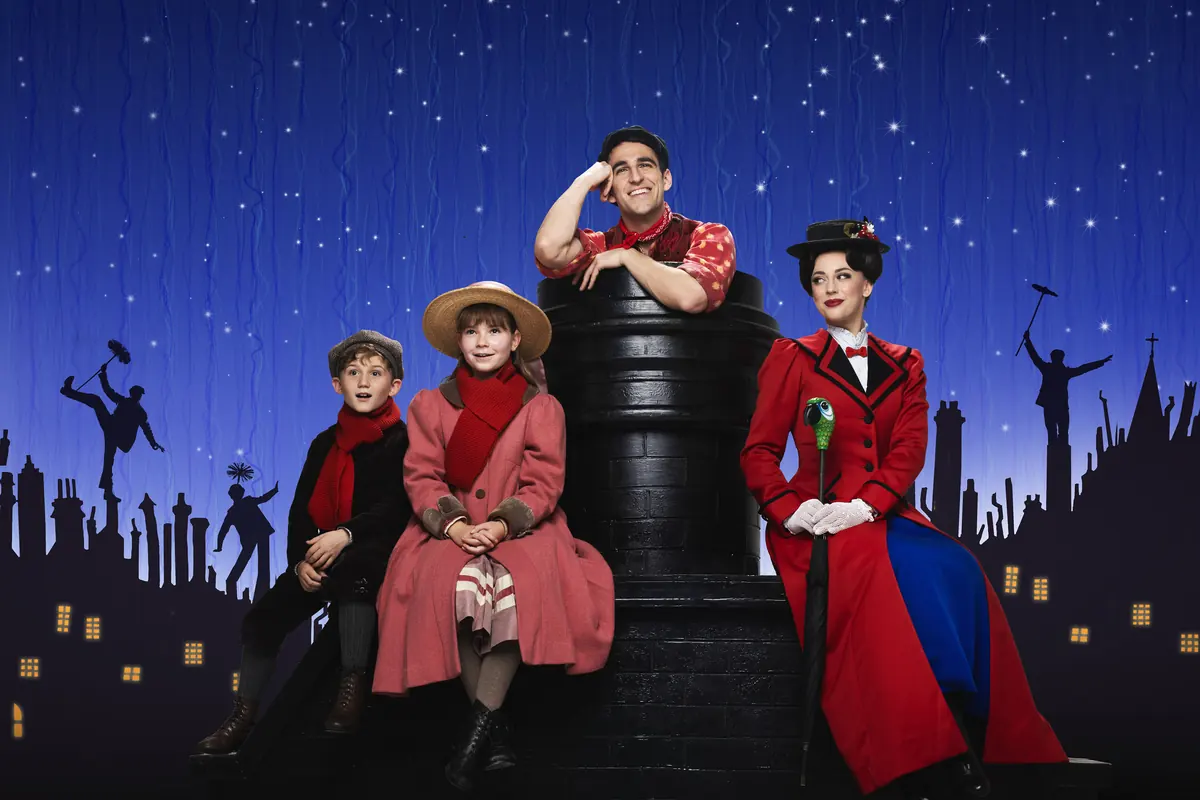
Among the standout portrayals was Australian actress Stefanie Jones, whose acclaimed performance as Mary Poppins in the Australian production earned her a Sydney Theatre Award for Best Performance in a Leading Role in a Musical. She later reprised the role alongside Jack Chambers as Bert on the UK and Ireland tour, which ran from November 2024 to January 2026. Her portrayal brought fresh energy and charm to one of musical theatre’s most beloved characters.
Over the years, the musical has reached audiences across numerous countries and languages, proving that the appeal of Mary Poppins extends far beyond any single production.
Its enduring success demonstrates something important about musical theatre: a familiar story can be reinvented without losing the qualities that made audiences fall in love with it in the first place.
Mary Poppins reminds us that theatre does not always need to tell us something entirely new. Sometimes, it simply needs to make us see something familiar differently.
And perhaps that is the real magic of this extraordinary nanny.
She arrives when she is needed, changes the lives of those around her and leaves us with a little more imagination than we had before.
After all, as Mary herself might remind us, everything is possible – even the impossible.
Photo gallery